The Founders
My grandfather, Wincenty Lisowski, immigrated to the U.S. from Poland in 1912. Something about his life, pre-immigration, was upsetting to him and for that reason he never talked about life back in "the old country". He wasn't a young man when he came to America. At age 28, he was certainly old enough to have had some kind of job before he left Poland but no one in the family knows what that might have been.
The Lisowski family members were peasant farmers and they did own their own land. Wincenty was the oldest son and by tradition should have and would have inherited the family farm. But he didn't. Or perhaps he did but didn't want it. Just a few months after his father died, he left Poland for the land of the free and the home of the brave and made his new home in the then bustling city of Detroit, Michigan.
Once in Michigan, Wincenty worked at a couple different places. He is known to have worked at the Michigan Milling and Beverage Company on Military Avenue in Detroit and for an "auto plant" prior to 1916. In January 1916 Wincenty married Zofia Mizera, also an immigrant from Poland, who was working as a seamstress.
Wincenty had a friend, Feliks Jaruga, who was also from Poland. Feliks immigrated in 1913 and was a baker by trade. In February 1917, Wincenty and Feliks went into business together buying a bakery owned by Louis Robakiewicz and his son Stanley. It was just a small, two-story frame building located on the corner of 30th and Herbert Streets in their west-side Polish neighborhood. A short time after Wincenty and Zofia's first child was born, the family moved into the apartment above the bakery and Wincenty and Feliks' entrepreneurship began with their new enterprise, the Polonia Baking Company (PBC).
Setting Up Business
Wincenty must have learned the baking business from Feliks because I can find no evidence of him working in the baking trade before he and Feliks established the PBC. He would come to learn that owning and running a bakery wasn't an easy life, especially after Feliks wanted out of the business less than a year after they started it.
The PBC operated 6 days a week. Wincenty's only day off was Saturdays. The rest of the time he arose in the early hours of the night and made his way to the kitchen to begin the process of making the dough for the fresh bread and pastries that they would begin selling in the store front at 7am. After she fed and clothed their infant daughter, Zofia would come downstairs and run the front counter while Wincenty and Feliks worked their magic back in the kitchen.
Before long (just a few months), Feliks wanted out of the baking business. He'd met a nice girl who lived on the east side of town and he wanted to marry her. But she didn't want to move away from her family to the west side of town. I'm not sure if Wincenty and Feliks' parting was amiable or not but I believe it was. Bad business relations tend to be the kind of thing that gets whispered about among family members in the retelling of the "old days" but I never heard about any ill will towards Feliks. In any event, Wincenty bought out Feliks' share of the business and he became President and Zofia became the secretary-treasurer of the PBC. Feliks married in April 1918, just over a year from the time he and Wincenty went into business together. By then he was working as a machinist, presumably somewhere on the east side of Detroit. Before the year was out, Feliks and his bride would have a daughter of their own.
Expanding the Business and Family
Meanwhile, Wincenty had big ideas for his little bakery. Business was going well enough that in 1919 he hired an architectural firm to draw up plans for expansion. And they were pretty ambitious plans! He bought out the two houses next door to the bakery and began construction of a substantial two-story brick addition with hopes of eventually buying more land and expanding even more. The new addition was completed in 1920 and the PBC business grew and grew. So did Wincenty's family.
Another daughter was born to Wincenty and Zofia in 1918 (My mom, Lucyna, was born in the apartment above the bakery.) In 1920, two of Zofia's sisters immigrated to the U.S. and came to live with them also. And in early 1921 Zofia gave birth to a son. In 1919 the family moved out of the bakery apartment to a small home kitty corner from the bakery. In 1920 they moved again to a larger home 4 doors down 30th Street from the bakery. Whew! What an exciting time that must have been for the Lisowski family... expanding their business, their family, and their residence in the span of just 3 years! Life was good for this immigrant family.
Sadly, it wasn't so good for Wincenty's friend and former business partner. Feliks was killed in May 1920, hit by a train while trying to outrun it in his car. Feliks' brother, Maryan, was also in the car at the time but he survived the accident. He married Feliks' widow and raised their daughter as his own. Maryan owned a music store and sold musical instruments and sheet music.
The "Roaring Twenties" were a time of robust business in Detroit, Michigan, and throughout the U.S. Wincenty hired more and more employees, mostly family members, neighbors, and friends, until he had 30+ people working for him. He bought 7 delivery vans so that he could deliver his baked goods to neighborhood grocery stores throughout Detroit, Hamtramck, and the Delray areas. He was a well known businessman in the west-side Polish community and the family had a prosperous life.
And then came the stock market crash of 1929.
And the Great Depression.
The Difficult Years
The Depression years were difficult for the PBC. People had no money. Those who were employed could afford fresh bread (at $.10 a loaf) but most people stood in long lines for day-old bread (at $.05 a loaf). Very few people had money for pastries or cakes, not even for special occasions. Wincenty struggled to keep the bakery going but it wasn't easy.
By 1934-1935 Wincenty knew he had to do something. He didn't want to let any of his employees go because they were almost all his family members, neighbors, and friends. He came up with the idea to have half the employees work the first 3 days of the week and the other half work the other 3 days of the week that the bakery was open. That way no one would be jobless. Unfortunately, the employees didn't like his idea.
The disenchanted employees of the PBC demanded full-time employment and when Wincenty told them he couldn't keep them on full-time they organized and joined a local union. Compared to some of the violent union activities at the time, the discontent aimed at the PBC was relatively mild. But it was enough to put it out of business. Some union sympathizers released smoke bombs in the back of the delivery vans when the drivers were unloading baked goods. Police reports were made but there was little that could be done to repair the damage or prevent further incidents. The stinky smoke filled the vans and no amount of cleaning would remove it. No baked goods could be transported in the vans without also taking on the stinky smell. The financial loss of the vans was more than the business could handle.
In 1935-36, Wincenty and Zofia sold the bakery to a Greek family. They weren't in business long before they closed up shop as well.
Looking Back
The PBC had a substantial impact on my grandparent's lives as well as the lives of their children, extended family members, their neighbors and community. It was the focus of Wincenty and Zofia's world for the 20 years they owned it. It provided a very good standard of living for most of those years and I believe they would have been labeled a success by their family back in Poland as well as their fellow immigrants to this great nation. A lot of hard work, long hours, and prayer went into their success. I greatly admire their determination and dedication.
As is often the case with family history, I still have many questions. Where did Wincenty, Zofia, and Feliks come up with money to buy the small bakery in the first place? Did Feliks' widow regret her husband selling out his share of the bakery and moving to the east side of the city to be with her? Are there any records of incorporation or solvency available on the bakery and if so, where? Why didn't Wincenty go forward with his grand plans to expand the bakery? Were my grandparents and the bakery employees on speaking terms when he sold the bakery or were the employees too bitter at that point?
A hundred times or more I have imagined the scent and taste of the Polish rye bread my grandfather was famous for. I've daydreamed about the pastries, cakes, babkas, cheesecakes, cinnamon rolls, egg bread, chrusciki, poppy seed and nut rolls I know they made there. No doubt about where I got my sweet tooth!
Pictured above, my grandfather stands on the sidewalk outside his bakery. You can see the bay windows of the apartment upstairs where my mother was born. On the left side of the image you can see part of the brick addition Wincenty added after buying the two houses next door to the bakery. I wish I had more old photos of the bakery. There are never enough old photos!!!
A blog about Polish genealogy, Michigan genealogy, and Detroit genealogy.
Showing posts with label Detroit. Show all posts
Tuesday, July 31, 2012
Tuesday, November 29, 2011
Thanksgiving in Detroit
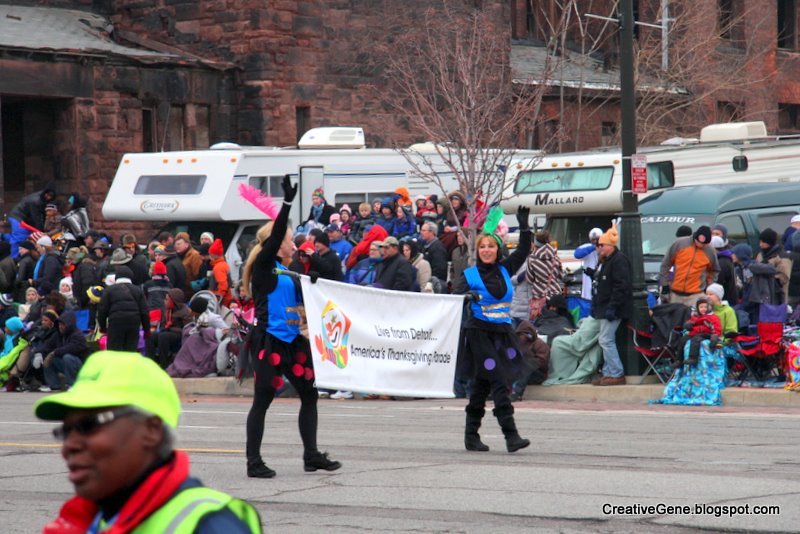
Long before I was born a Thanksgiving Day tradition was started in Detroit. That tradition was a parade. The first parade was put together in 1924 and there has been one on the streets of Detroit every year since except for 1943 and 1944 when it was suspended because of a materials shortage due to WWII.
In the early years, the Thanksgiving Day parade was sponsored by Detroit's J. L. Hudson department store. It was first broadcast on radio in 1931 and on television it's been carried nationally since 1959. Every year there are common elements... floats, marching bands, clowns, and Santa Claus. And each year there are changes to the floats and marching bands. Big balloons and paper mache heads were added also.
J.L. Hudson sponsored the parade until 1979 when it was handed over to the Detroit Renaissance Foundation. They then handed it over to the Michigan Thanksgiving Parade Foundation in 1983. It is put on every year with help from many generous corporate sponsors and more than 4,000 volunteers. The warehouse where the floats and costumes are stored gives tours throughout the year.
The parade route has changed a few times over the years. I believe it has always had Woodward Avenue as a part of its route. I know that some of my grand aunts and uncles attended the parade because I've see their photographs of the parade in family photo albums. I believe many of my cousins have attended the parade in person too. I went to the parade for the first time on Thanksgiving of 1973 and didn't attend in person again until this year, 2011. But I've watched it on TV every year as far back as I can remember.
As a child, I used to look forward to watching the Thanksgiving parade on TV. At the end of the parade Santa Claus was greeted by the mayor of the city and presented with "the key to the hearts of the children of Detroit". This marked the official beginning of the Christmas season, my favorite time of the year! Children all throughout the city and the metro Detroit area knew that starting then you had to "be nice" or Santa wouldn't bring you what you wanted for Christmas.
When I was a child, you never saw Christmas decorations before Thanksgiving! Not on houses, not in stores, and there was no Christmas music played on the radio yet either.
I can remember my mom cooking in the kitchen on Thanksgiving morning and popping into the living room (the only room in the house that had a television) to check on the parade. I still remember the smell of her sauteing onions, celery, and green peppers for the stuffing... what a wonderful scent! Mom would play up my excitement with questions like, "Any sign of Santa yet?", "Did you count the marching bands? How many so far?", or my favorite comment, "Let me know when you see Santa. I don't want to miss him!" And sure enough, when I called out to her to announce Santa, she'd come running. We'd always judge how good a Santa he was, if he looked real or fake, and if he had a friendly face.
My dad and brothers weren't into the parade or Santa. I don't remember them ever watching the parade with me or being a part of my parade experience.
Just about the time the parade was over (about 11am), mom would pop the turkey in the oven. She'd have stuffed it with her traditional sage stuffing, using a recipe from her Better Homes and Gardens cookbook. Then she'd take a break from the work in the kitchen and we'd look through the 3" thick stack of sale ads that always came in the Thanksgiving Day edition of the Detroit News (which we had home delivered). Oh how I loved looking at all the toys in those ads!
In the afternoon I'd "help" my mom in the kitchen. I didn't do much, really, but she'd find something for my little hands to work at. Our Thanksgiving dinner consisted of turkey, stuffing, gravy (made from scratch, of course) with mushrooms, mashed potatoes, sweet potatoes, corn, dinner rolls, and cranberries in the form of canned Ocean Spray Jellied Cranberry Sauce. After smelling that turkey cooking all afternoon we all came to the table with our mouths watering. Mom was a really good cook and the food was always fantastic. For dessert she always made pumpkin chiffon pies with made-from-scratch whipped cream in the shape of snowflakes on the top. Oh man, my mouth is watering just thinking about those dinners!
Sadly, I have no pictures to share with you from my first visit to the parade in 1973. I know I took some photos but I have no idea what happened to them. I do, however, have a few photos to share with you from this year's "America's Thanksgiving Parade" as it is now known. I only stayed for half the parade but when I got home I turned on the TV and watched the second half. I think mom would have loved this year's Santa. I think he looks great! What do you think?
In the early years, the Thanksgiving Day parade was sponsored by Detroit's J. L. Hudson department store. It was first broadcast on radio in 1931 and on television it's been carried nationally since 1959. Every year there are common elements... floats, marching bands, clowns, and Santa Claus. And each year there are changes to the floats and marching bands. Big balloons and paper mache heads were added also.
J.L. Hudson sponsored the parade until 1979 when it was handed over to the Detroit Renaissance Foundation. They then handed it over to the Michigan Thanksgiving Parade Foundation in 1983. It is put on every year with help from many generous corporate sponsors and more than 4,000 volunteers. The warehouse where the floats and costumes are stored gives tours throughout the year.
The parade route has changed a few times over the years. I believe it has always had Woodward Avenue as a part of its route. I know that some of my grand aunts and uncles attended the parade because I've see their photographs of the parade in family photo albums. I believe many of my cousins have attended the parade in person too. I went to the parade for the first time on Thanksgiving of 1973 and didn't attend in person again until this year, 2011. But I've watched it on TV every year as far back as I can remember.
As a child, I used to look forward to watching the Thanksgiving parade on TV. At the end of the parade Santa Claus was greeted by the mayor of the city and presented with "the key to the hearts of the children of Detroit". This marked the official beginning of the Christmas season, my favorite time of the year! Children all throughout the city and the metro Detroit area knew that starting then you had to "be nice" or Santa wouldn't bring you what you wanted for Christmas.
When I was a child, you never saw Christmas decorations before Thanksgiving! Not on houses, not in stores, and there was no Christmas music played on the radio yet either.
I can remember my mom cooking in the kitchen on Thanksgiving morning and popping into the living room (the only room in the house that had a television) to check on the parade. I still remember the smell of her sauteing onions, celery, and green peppers for the stuffing... what a wonderful scent! Mom would play up my excitement with questions like, "Any sign of Santa yet?", "Did you count the marching bands? How many so far?", or my favorite comment, "Let me know when you see Santa. I don't want to miss him!" And sure enough, when I called out to her to announce Santa, she'd come running. We'd always judge how good a Santa he was, if he looked real or fake, and if he had a friendly face.
My dad and brothers weren't into the parade or Santa. I don't remember them ever watching the parade with me or being a part of my parade experience.
Just about the time the parade was over (about 11am), mom would pop the turkey in the oven. She'd have stuffed it with her traditional sage stuffing, using a recipe from her Better Homes and Gardens cookbook. Then she'd take a break from the work in the kitchen and we'd look through the 3" thick stack of sale ads that always came in the Thanksgiving Day edition of the Detroit News (which we had home delivered). Oh how I loved looking at all the toys in those ads!
In the afternoon I'd "help" my mom in the kitchen. I didn't do much, really, but she'd find something for my little hands to work at. Our Thanksgiving dinner consisted of turkey, stuffing, gravy (made from scratch, of course) with mushrooms, mashed potatoes, sweet potatoes, corn, dinner rolls, and cranberries in the form of canned Ocean Spray Jellied Cranberry Sauce. After smelling that turkey cooking all afternoon we all came to the table with our mouths watering. Mom was a really good cook and the food was always fantastic. For dessert she always made pumpkin chiffon pies with made-from-scratch whipped cream in the shape of snowflakes on the top. Oh man, my mouth is watering just thinking about those dinners!
Sadly, I have no pictures to share with you from my first visit to the parade in 1973. I know I took some photos but I have no idea what happened to them. I do, however, have a few photos to share with you from this year's "America's Thanksgiving Parade" as it is now known. I only stayed for half the parade but when I got home I turned on the TV and watched the second half. I think mom would have loved this year's Santa. I think he looks great! What do you think?
| The crowd cheered as the parade began. |
| The first balloon this year was a new one, Kermit the Frog. |
| Lots of clowns! |
| Horses are always a crowd favorite. |
| These uni-cyclists got lots of oohs and ahhs. |
| Local marching band. |
| More happy clown faces. |
| It wouldn't be an all-American parade without Uncle Sam. |
| New float this year, from Art Van Furniture. The biggest ever! |
| Here he is, the jolly ole man himself! |
Labels:
Detroit,
History,
Michigan,
Personal Genealogy
Monday, March 22, 2010
Melancholy Too
As long as I'm taking the melancholy trip down memory lane I may as well make a few other stops while I'm at it. When I recently visited my grandparent's neighborhood on Detroit's west side, I also stopped to photograph the property where their first house stood, where their second (and only other) house stood, where the kindergarten/public school stood, and where their church once stood. Yes, each and every one of those building is gone now...
When my grandparents first bought the little neighborhood bakery, before it expanded to become a "baking company", there was a small apartment above the bakery. That's where they lived initially and where my mother was born. Mom was their second child and after she came along things got a little crowded in the apartment. So when a small house went up for sale kitty-corner (southwest) and one house (to the south) down from the bakery (and directly across from Sill School) they bought it. That would have been late 1918 or some time in 1919. This is the vacant property where that house once stood.
Then, in 1920, my grandparents sponsored two of my grandmother's sisters, Mary and Helen, to come to America from Poland. The little house was a tight fit for everyone and when my grandmother got pregnant again, well, it very quickly became too small. So at that point my grandparents bought a bigger house that came up for sale on the same street as the bakery just a few houses north of it. The two sisters stayed in the smaller house and my grandparents and the kids moved to the bigger house in 1921. Mary married in 1922 and moved a few blocks away. Helen married in 1924 and she and her husband lived in that little house for several hears. If I close my eyes and try really hard I can picture Helen and her children there in that house...
The larger house that my grandparents moved to wasn't all that large but it did have a second story and was big enough for the family of five. This is the house I remember visiting my grandmother at when I was a child. Here is the vacant property where that house once stood, between the garbage cans to the right of the house that's still standing...
If I close my eyes and try really hard I can picture the house and the family sitting out on the porch on a warm Sunday afternoon...
My mom went to Sill School for kindergarten. It was the Detroit Public School just across the street (to the south) from the bakery and (to the east) from my grandparent's first house. It's a large vacant lot now with a small playground on it.
But I can remember the school in all it's glory!
After kindergarten my mom attended Assumption parish school for grades 1-8. Assumption BVM Church, on Lovett Street, was the church the family attended. Mom had lots of happy memories from her years at Assumption. After she graduated from high school she sang in the choir at Assumption and was in their Young Ladies Sodality too. She was married at Assumption in 1944. My grandfather's funeral Mass was at Assumption in 1956 and so was my Grandmother's in 1970. The Archdiocese of Detroit closed Assumption parish in 1989. The church, school, rectory, and nun's residence have since been torn down. There is a new church standing there now, a Baptist church...
The heartbeat of their old west side Detroit Polish neighborhood was Assumption Church (parish founded in 1911, church/school built in 1912). It was a much larger and grander building than the Baptist church, and the other parish buildings were right next door. If I close my eyes and try really hard I can imagine it in its glory days...
Oh how it pains me to see this once lovely neighborhood in such decrepit, shabby condition. I can't go down there very often for that reason. The sadness overwhelms me and sometimes makes me angry. I know that things can't always stay the same but when I think of the churches and villages in Europe that were built centuries ago and are still standing I know that this neighborhood could still be charming and vital too. It hasn't even been a hundred years since my grandparents first came to America! Heck, the city of Detroit is just over 300 years old!
All these other sites in my grandparent's neighborhood make me melancholy too.
When my grandparents first bought the little neighborhood bakery, before it expanded to become a "baking company", there was a small apartment above the bakery. That's where they lived initially and where my mother was born. Mom was their second child and after she came along things got a little crowded in the apartment. So when a small house went up for sale kitty-corner (southwest) and one house (to the south) down from the bakery (and directly across from Sill School) they bought it. That would have been late 1918 or some time in 1919. This is the vacant property where that house once stood.
Then, in 1920, my grandparents sponsored two of my grandmother's sisters, Mary and Helen, to come to America from Poland. The little house was a tight fit for everyone and when my grandmother got pregnant again, well, it very quickly became too small. So at that point my grandparents bought a bigger house that came up for sale on the same street as the bakery just a few houses north of it. The two sisters stayed in the smaller house and my grandparents and the kids moved to the bigger house in 1921. Mary married in 1922 and moved a few blocks away. Helen married in 1924 and she and her husband lived in that little house for several hears. If I close my eyes and try really hard I can picture Helen and her children there in that house...
The larger house that my grandparents moved to wasn't all that large but it did have a second story and was big enough for the family of five. This is the house I remember visiting my grandmother at when I was a child. Here is the vacant property where that house once stood, between the garbage cans to the right of the house that's still standing...
If I close my eyes and try really hard I can picture the house and the family sitting out on the porch on a warm Sunday afternoon...
My mom went to Sill School for kindergarten. It was the Detroit Public School just across the street (to the south) from the bakery and (to the east) from my grandparent's first house. It's a large vacant lot now with a small playground on it.
But I can remember the school in all it's glory!
After kindergarten my mom attended Assumption parish school for grades 1-8. Assumption BVM Church, on Lovett Street, was the church the family attended. Mom had lots of happy memories from her years at Assumption. After she graduated from high school she sang in the choir at Assumption and was in their Young Ladies Sodality too. She was married at Assumption in 1944. My grandfather's funeral Mass was at Assumption in 1956 and so was my Grandmother's in 1970. The Archdiocese of Detroit closed Assumption parish in 1989. The church, school, rectory, and nun's residence have since been torn down. There is a new church standing there now, a Baptist church...
The heartbeat of their old west side Detroit Polish neighborhood was Assumption Church (parish founded in 1911, church/school built in 1912). It was a much larger and grander building than the Baptist church, and the other parish buildings were right next door. If I close my eyes and try really hard I can imagine it in its glory days...
Oh how it pains me to see this once lovely neighborhood in such decrepit, shabby condition. I can't go down there very often for that reason. The sadness overwhelms me and sometimes makes me angry. I know that things can't always stay the same but when I think of the churches and villages in Europe that were built centuries ago and are still standing I know that this neighborhood could still be charming and vital too. It hasn't even been a hundred years since my grandparents first came to America! Heck, the city of Detroit is just over 300 years old!
All these other sites in my grandparent's neighborhood make me melancholy too.
Labels:
Detroit,
History,
Personal Genealogy
Sunday, March 21, 2010
Melancholy
Sometimes looking back makes me happy. I love to remember my mom and my dad, my brothers when they still lived at home with us, my high school years, holding my kids when they were babies, visiting my grandmother and plunking away on her piano, Christmas, Easter, and summer vacations. But looking back isn't always pretty. Sometimes it's littered with trash, it has crumbling walls and broken windows, and it's hard to imagine the glory days.
We recently took a drive to visit the neighborhood where my grandparents used to live on the west side of Detroit. I don't go there often because it's dilapidated, dirty, and dangerous. Some neighborhoods in the city are still pretty well intact. This isn't one of them. In this neighborhood there are more empty lots than houses on every block. Most of the houses that are still standing, aren't occupied.
The streets are empty. No children play outside. Rusted out old jalopies outnumber cars that actually run. The sidewalks are cracked and uneven. The overgrown grass has made them much narrower than they were intended to be. There are all kinds of "old"... the pretty, quaint, old of European villages, the charming old of the well maintained historic buildings at Greenfield Village, the character old of a countryside barn that could stand a coat of paint. And then there's the old, ugly neighborhoods of Detroit that aren't quaint, and have no charm or character. They haven't aged well. They're grey and scraggly even on the sunniest day. They are sad and depressing. They leave you cold.
The lawns haven't been tended in decades. They're strewn with carelessly discarded items that nobody wants. It's a dumping ground for things nobody cares about, on property nobody cares about, by people who don't give a damn what kind of slum they live in. There's a story here and it's one of neglect, apathy, and hopelessness.
The alleys that once provided access to garages and carriage houses are now overgrown, littered, and broken. The gleeming cars of the Roaring Twenties with running boards and enough chrome to blind you couldn't make it down them anymore. They no longer serve a purpose. They are just a catch-all wasteland.
When you look in the front door of a building you see that the inside is just as abused and neglected as the outside. Entrance ways that once welcomed family, friends, and neighbors, are now cluttered with shards of glass, rotting boards, and refuse. They are stark and forlorn.
The insides were long ago stripped of anything salvageable and what's left has been vandalized for no good reason whatsoever. The electical wiring has been ripped from the ceilings and walls and sold as scrap metal to support someone's drug habit. The walls are barely standing, the paint that's left is pealing, the windows that aren't broken are boarded up. There are no rats inside because there is no food to lure them. It's barren.
The ceilings are fallen in. The pipes that once carried fresh, clean, water throughout the structure were long ago sold as scrap metal too. When you look at this kind of devestation you wonder what was going on in the minds of those who destroyed it. And then you think, "No, I don't want to know".
Gaping holes in the floor prohibit you from wandering beyond the doorway. It isn't safe to walk through this place. At one time this was a viable, thriving business, then a church for lost souls, then a chop shop for car thieves, and now it's just another abandoned building in various stages of decay. Oh the stories these walls could tell if only they had a voice! But they have no voice. They are silent sentinels that may not be standing much longer.
At one time these big, once-beautiful windows looked out on a bustling neighborhood full of houses occupied by recent Polish immigrants who worked from sunup to sundown to get ahead, worshiped in the neighborhood Catholic Church every Sunday and holy day, cared for their children, and struggled to learn a new language and become good citizens of America. They swept their porches and sidewalks daily and when their neighbors were feeling poorly they swept their's too. They had pride and hard work was their way of life.
At one time this was the private office of a very successfull businessman. That was before it became a pastor's study. And before it fell into the hands of crooks. Looking at this office, it's very hard to picture those glory days. But they happened. They were real. Now this is.
Ugly.
Very, very sad.
Walking away from this building, this neighborhood, doesn't end the sadness. It says with you and haunts you.
This isn't just any old abandoned building in Detroit. It was originally a modern, successful, baking company owned by my grandparents who contracted with an architect to build this particular section of the building so they could expand their operation. The older section of the facility has been gone (decay? fire? vandalism?) for many years. This is all that's left standing. And I suspect it won't be standing much longer.
I have photos of the baking company in its hey day. And I have a sketch of what it was to become back when my grandfather planned to expand it even more. They were grand plans! This was once a wonderful place full of the smells of freshly baked bread, cinnamon rolls, and pastries. It was all lit up in the wee hours of the morning as my grandfather and his staff prepared their baked goods fresh every day. Even on the coldest of winter nights the ovens kept the place toasty-warm. It was a happy place, a meticulously clean place, a place where neighbors would meet and catch up with each other's lives as they stood in line to buy their bread and baked goods. It provided the most amazing cakes for all the First Holy Communion parties, weddings, birthdays, and graduation parties in the neighborhood. It provided rich desserts, babkas, sweet breads, and paczki, for every holiday dinner table. And when times got tough, during the Great Depression, it provided sustenance to those who could afford nothing more than day-old bread for their dinner table.
But I'll save those photos and stories for another time when I'm not feeling so melancholy. I just couldn't do them justice this day.
We recently took a drive to visit the neighborhood where my grandparents used to live on the west side of Detroit. I don't go there often because it's dilapidated, dirty, and dangerous. Some neighborhoods in the city are still pretty well intact. This isn't one of them. In this neighborhood there are more empty lots than houses on every block. Most of the houses that are still standing, aren't occupied.
The streets are empty. No children play outside. Rusted out old jalopies outnumber cars that actually run. The sidewalks are cracked and uneven. The overgrown grass has made them much narrower than they were intended to be. There are all kinds of "old"... the pretty, quaint, old of European villages, the charming old of the well maintained historic buildings at Greenfield Village, the character old of a countryside barn that could stand a coat of paint. And then there's the old, ugly neighborhoods of Detroit that aren't quaint, and have no charm or character. They haven't aged well. They're grey and scraggly even on the sunniest day. They are sad and depressing. They leave you cold.
The lawns haven't been tended in decades. They're strewn with carelessly discarded items that nobody wants. It's a dumping ground for things nobody cares about, on property nobody cares about, by people who don't give a damn what kind of slum they live in. There's a story here and it's one of neglect, apathy, and hopelessness.
The alleys that once provided access to garages and carriage houses are now overgrown, littered, and broken. The gleeming cars of the Roaring Twenties with running boards and enough chrome to blind you couldn't make it down them anymore. They no longer serve a purpose. They are just a catch-all wasteland.
When you look in the front door of a building you see that the inside is just as abused and neglected as the outside. Entrance ways that once welcomed family, friends, and neighbors, are now cluttered with shards of glass, rotting boards, and refuse. They are stark and forlorn.
The insides were long ago stripped of anything salvageable and what's left has been vandalized for no good reason whatsoever. The electical wiring has been ripped from the ceilings and walls and sold as scrap metal to support someone's drug habit. The walls are barely standing, the paint that's left is pealing, the windows that aren't broken are boarded up. There are no rats inside because there is no food to lure them. It's barren.
The ceilings are fallen in. The pipes that once carried fresh, clean, water throughout the structure were long ago sold as scrap metal too. When you look at this kind of devestation you wonder what was going on in the minds of those who destroyed it. And then you think, "No, I don't want to know".
Gaping holes in the floor prohibit you from wandering beyond the doorway. It isn't safe to walk through this place. At one time this was a viable, thriving business, then a church for lost souls, then a chop shop for car thieves, and now it's just another abandoned building in various stages of decay. Oh the stories these walls could tell if only they had a voice! But they have no voice. They are silent sentinels that may not be standing much longer.
At one time these big, once-beautiful windows looked out on a bustling neighborhood full of houses occupied by recent Polish immigrants who worked from sunup to sundown to get ahead, worshiped in the neighborhood Catholic Church every Sunday and holy day, cared for their children, and struggled to learn a new language and become good citizens of America. They swept their porches and sidewalks daily and when their neighbors were feeling poorly they swept their's too. They had pride and hard work was their way of life.
At one time this was the private office of a very successfull businessman. That was before it became a pastor's study. And before it fell into the hands of crooks. Looking at this office, it's very hard to picture those glory days. But they happened. They were real. Now this is.
Ugly.
Very, very sad.
Walking away from this building, this neighborhood, doesn't end the sadness. It says with you and haunts you.
This isn't just any old abandoned building in Detroit. It was originally a modern, successful, baking company owned by my grandparents who contracted with an architect to build this particular section of the building so they could expand their operation. The older section of the facility has been gone (decay? fire? vandalism?) for many years. This is all that's left standing. And I suspect it won't be standing much longer.
I have photos of the baking company in its hey day. And I have a sketch of what it was to become back when my grandfather planned to expand it even more. They were grand plans! This was once a wonderful place full of the smells of freshly baked bread, cinnamon rolls, and pastries. It was all lit up in the wee hours of the morning as my grandfather and his staff prepared their baked goods fresh every day. Even on the coldest of winter nights the ovens kept the place toasty-warm. It was a happy place, a meticulously clean place, a place where neighbors would meet and catch up with each other's lives as they stood in line to buy their bread and baked goods. It provided the most amazing cakes for all the First Holy Communion parties, weddings, birthdays, and graduation parties in the neighborhood. It provided rich desserts, babkas, sweet breads, and paczki, for every holiday dinner table. And when times got tough, during the Great Depression, it provided sustenance to those who could afford nothing more than day-old bread for their dinner table.
But I'll save those photos and stories for another time when I'm not feeling so melancholy. I just couldn't do them justice this day.
Labels:
Detroit,
History,
Personal Genealogy
Sunday, March 14, 2010
Michigan History for Genealogists
The Historical Society of Michigan is presenting it's local history conference next weekend in Dearborn, Michigan.
Check out the brochure for more details.
The 52nd annual Michigan in Perspective: the Local History Conference will be held March 19-20, 2010 at The Dearborn Inn. The conference was organized by the Michigan in Perspective Planning Committee and the lead sponsor and conference administrator is the Historical Society of Michigan. Other major sponsors include the Detroit Historical Society, Detroit Public Library and the Detroit Salt Company as well as the Detroit Society for Genealogical Research.There will be sessions on: Ethnic Detroit, Photojournalism Resources in Detroit, Women in Michigan History, Oral History, Genealogy, Historic Preservation, Michigan's Aviation and Maritime History, the Underground Railway in Detroit, and Revolutionary Detroit. Whew! Something for everyone!
Check out the brochure for more details.
Tuesday, November 24, 2009
Ode to a Detroit Landmark
St. Joseph’s
There is a Gothic church
With a tall and slender spire
In the old section of the city,
That seems to float
In lighter than air fashion
Toward heaven as if the
Stones themselves are
Moving toward God.
I have never been inside,
But each time I pass
I say to myself that one
Day I will stop to say
A prayer there.
I have Been promising this prayer
For many years.
There is a Gothic church
With a tall and slender spire
That is a baroque concerto
Frozen in stone and mortar.
I must go there one day,
Walk through the center portal
Under the large rose window,
Hearing my footsteps on the
Tiled floor of the nave echoing
From vaulted ceilings,
Enter a pew near the altar
And kneeling, hands folded,
Head bowed, let my prayers
Float like stones.
There is a Gothic church
With a tall and slender spire
In the old section of the city,
That seems to float
In lighter than air fashion
Toward heaven as if the
Stones themselves are
Moving toward God.
I have never been inside,
But each time I pass
I say to myself that one
Day I will stop to say
A prayer there.
I have Been promising this prayer
For many years.
There is a Gothic church
With a tall and slender spire
That is a baroque concerto
Frozen in stone and mortar.
I must go there one day,
Walk through the center portal
Under the large rose window,
Hearing my footsteps on the
Tiled floor of the nave echoing
From vaulted ceilings,
Enter a pew near the altar
And kneeling, hands folded,
Head bowed, let my prayers
Float like stones.
Poem: "St Joseph's" by
© Doug Tanoury 2003
All Rights Reserved
Reprinted here with permission
Read Doug Tanoury's poetry here.
Tuesday, August 25, 2009
Streetcars in Detroit
If your family members lived in Detroit from the late 1800s thru the 1950s, there's a good chance they rode the streetcars. Yes, at one time Detroit had a vibrant mass transit system! If you'd like to learn more about how your ancestors got around town, here's your chance. The Livonia Public Library will be hosting the following program.
A STREETCAR IN DETROIT: The Civic Center Library welcomes back its series of lectures on local history "History Lives @ the Library". This month Brian Golden of the Farmington Historical Society will discuss the impact of the Interurbans in Detroit. The streetcars that crossed Metro Detroit in the early twentieth century had great social and economic impact, including providing transportation for auto workers well into the 1950s. So join us on Monday September 28th at 7:00 pm in the Civic Center Auditorium for a ride back to Detroit's past. For more information, please call the Civic Center Library at (734) 466-2197. Livonia's Civic Center Library is located on Five Mile Rd. between Farmington Rd. and Merriman Rd. The lecture is free and open to the public.
Tuesday, February 24, 2009
Polish Genealogy Class in Livonia, MI
My friend Ceil Jensen is teaching a genealogy class at the Simply Polish shop in Livonia.
It will be this coming Sunday, March 1st from 1:00pm - 2:30pm and 3:30pm - 5:00pm. There is limited seating and you need to pre-register. Bring some paper and a pen. Handouts will be given and refreshments will be provided.
For more information and to pre-register for this class visit the Simply Polish shop web site.
Labels:
Detroit,
Polish Genealogy
Monday, September 15, 2008
A Series on Immigration to Detroit: Ethnic Groups
Metro Detroit area genealogists, rejoice! For coming this fall to the Lorenzo Cultural Center (aka Macomb Cultural Center) is a wonderful series of lectures and presentations on the immigration of various ethnic groups to the Detroit area. Polish, German, Arab, Jewish, Irish, African, Greek, Scot, and more will all have their day (some more than one day :-) . This is a great chance to explore the immigration issues that your ancestors had to face and what the neighborhoods they lived in looked like. Here are the offerings that may be of interest to Polish genealogy researchers:Poles in MichiganOct. 3 (Fri.) 11:00 am & 1:00 pmBorn and raised in Hamtramck, author and professor emeritus at Northern Michigan University Dennis Badaczewski highlights the four waves of Polish emigration to Michigan and their assimilation, and discusses Polish surnames and their meanings.Mosaic of Migration: Michigan 1701 - 2001Oct. 5 (Sun.) 2:00 pmThaddeus C. Radzilowski, Ph.D., president of the Piast Institute, explores how Michigan was shaped in unique ways by the migrations of the last three centuries.Hamtramck: Soul of a CityOct. 9 (Thu.) 11:00 am & 1:00 pmLifelong Hamtramck resident and chairman of the city’s historical commission Greg Kowalski discusses the evolution of Hamtramck from a dusty farming community on the edge of Detroit into a nationally recognized multicultural town.Michigan Immigration and the German SettlementsOct. 10 (Fri.) 11:00 am & 1:00 pmJeremy W. Kilar, professor of history at Delta College, explores the social forces that transformed Germans from inward-looking immigrants to Michigan to citizens in the cultural mainstream.A Polish Girl Becomes AmericanizedOct. 18 (Sat.) 2:00 pmBorn Ludomira Zaremba, Mira Green shares the story of her escape from Poland during the German occupation and starting over from scratch in Detroit.German Oktoberfest CelebrationOct. 25 (Sat.) 1:00 - 4:00 pmA celebration of German culture highlighted by the Oktoben German Band. German food available for purchase.
This is only "a slice of the pie" of offerings. Check out the events schedule for a complete listing of presentations, dates and times for all the ethinic groups. Enjoy!
(Thanks to my cousin Mary Ellen for passing along this information to me!)
Wednesday, June 25, 2008
Vintage Cars, The Chrome Show Part 2
Have I mentioned how much I like the cars of yesteryear? Well, I love 'em! I think they have sooo much more character than the cars of today. There's so much to like about them, not the least of which is all that beautiful chrome that adorned them. I've already shown you some of my favorite hood ornaments. Now I'd like to share with you some the other chrome highlights on the vintage cars from this year's Motor Muster at Greenfield Village.
Let's start with grills. I could do an entire series on the front grills of cars from the 1930s-1970s but I'll try to contain my enthusiasm and limit my photos to just a few. Grills, after all, are only the "tip of the ice burg" so to speak. There's lots more chrome on the cars of yesteryear to be considered. Still, grills are often the first part of car that you see. So let's start there.

This one is a real cutie! It's a 1961 Metropolitan. Check out the bonnets over the headlamps (which are ringed in chrome too). They make the headlamps look like eyes with the bonnets giving the effect of eyelashes. Don't you just find yourself waiting for the bonnets to blink? Now this car has person-ality!


These next two beauties are 1957 Mercurys. The double set of chrome coated headlamps looks like a double set of eyes! But also check out the other chrome detailing on this baby. The solid wheel covers and massive bumpers grab your eye but if you study it a bit longer you begin to see the styling details that make this car a real work of art. There's the letter "M" in the center of the bumper and all those vertical lines above it that give the grill visual interest. The contrast of large bold sections and thin detailed elements with a double set of eyes looking back at you will capture your attention for sure. The styling detail seen here is so lacking in the cars of today. Before we move on, did you notice the third set of "eyes" staring at you from the roof line of the black Mercury? Sa-weeet!
This car has facial expression in spades! It's a 1955 Pontiac Starchief. Notice the little chrome accents above the headlamps. Don't they remind you of eye brows? And what about that gaping hole above the bumper... doesn't it look like an open mouth? The massive chrome bumper looks like a strong jaw. All this car needs to complete the facial look is to drop that hood ornament down the front so it's pointing at the ground... wouldn't that make a perfect nose?


Pictures of these two cars would make for great conversation pieces in a psychotherapist's office. The black car is a 1935 Cadillac Eldorado, the red car is a 1955 Buick Special. What do you see when you look at the chrome styling? Aggressiveness? Anger? Sexual images? Class? Strength? Power? Faces? All of the above? My guess is that some days you'd see certain attributes, other days you'd see others, depending on your mood. A discussion would likely provide great insight into your mood and mindset.
This model, a 1957 Chevrolet Bel Air, has very aggressive styling. The hood even has what looks like gun turrets on it! This car has attitude in spades! It says, "Get outta my way, buster! I mean business!" LOL! Some people say that the road rage that is so very prevalent on our streets these days has come about as a result of how stressful our society has become. I say it's always been there but it used to be expressed in vehicles instead of with vehicles.

Contrast the previous three cars with this one. It's a 1953 Buick (a black version of Grandma Mazur's car that Stephanie Plum often gets stuck driving around Trenton ;-) . There's still massive amounts of chrome on the grill but the style lines are softer, not so much edginess. And check out the chrome port holes. They're filled in on the black car in the foreground but the same model in light blue in the background has port holes that look more like true "holes". Interesting, eh?
Moving on from grills... here we have a 1957 Olds 88. This car has lots of chrome detailing. Notice how the body is sculpted just above the door handle. Curving style lines are carved into the body and highlighted with chrome accents. The front windshield and rear window are also ringed in chrome. Remember vent windows? Only those who rode in cars before air conditioning became standard will remember playing with them to direct the most air flow for ideal comfort.
Look at the chrome on this 1955 Ford Fairlane Crown Victoria. It's placed all around this model and gives it a really deluxe look. You just don't see this kind of design in cars anymore and I'm not talking about the creative colors. There are very few visual accents to cars these days. Everything is streamlined to be sleek and fuel efficient. That may be practical given the price of gas these days but it takes the character right out of a car!
We'll wrap up with a look at chrome on the rear bumper. Here's the 1957 Olds 88 again. Look at the size of that rear bumper! This car is from the days when the length of a car was thought be a reflection of the length of man's private body part and the size of his wallet. And check out the spare tire cased in chrome! This car was made extra long with the addition of the exterior spare tire and an extended bumper. This set of wheels was for only for the well endowed man ;-)
This is a 1950 Nash Ambassador Super. This model has great curve appeal, if you're in to that sort of thing. The chrome ending is both stylish and practical, limiting the amount of damage that might be done in a rear end crash. Rear bumpers were not typically given the same amount of attention to detail that front grills were but this one has very nice accents and lines.
That about wraps it up for the chrome show. If I can find the time, I'd like to showcase more of these fabulous vintage cars from the Motor Muster. Maybe I'll do a post on the creative colors on the cars of yesteryear. Anyone interested?
Let's start with grills. I could do an entire series on the front grills of cars from the 1930s-1970s but I'll try to contain my enthusiasm and limit my photos to just a few. Grills, after all, are only the "tip of the ice burg" so to speak. There's lots more chrome on the cars of yesteryear to be considered. Still, grills are often the first part of car that you see. So let's start there.

This one is a real cutie! It's a 1961 Metropolitan. Check out the bonnets over the headlamps (which are ringed in chrome too). They make the headlamps look like eyes with the bonnets giving the effect of eyelashes. Don't you just find yourself waiting for the bonnets to blink? Now this car has person-ality!


These next two beauties are 1957 Mercurys. The double set of chrome coated headlamps looks like a double set of eyes! But also check out the other chrome detailing on this baby. The solid wheel covers and massive bumpers grab your eye but if you study it a bit longer you begin to see the styling details that make this car a real work of art. There's the letter "M" in the center of the bumper and all those vertical lines above it that give the grill visual interest. The contrast of large bold sections and thin detailed elements with a double set of eyes looking back at you will capture your attention for sure. The styling detail seen here is so lacking in the cars of today. Before we move on, did you notice the third set of "eyes" staring at you from the roof line of the black Mercury? Sa-weeet!
This car has facial expression in spades! It's a 1955 Pontiac Starchief. Notice the little chrome accents above the headlamps. Don't they remind you of eye brows? And what about that gaping hole above the bumper... doesn't it look like an open mouth? The massive chrome bumper looks like a strong jaw. All this car needs to complete the facial look is to drop that hood ornament down the front so it's pointing at the ground... wouldn't that make a perfect nose?

Pictures of these two cars would make for great conversation pieces in a psychotherapist's office. The black car is a 1935 Cadillac Eldorado, the red car is a 1955 Buick Special. What do you see when you look at the chrome styling? Aggressiveness? Anger? Sexual images? Class? Strength? Power? Faces? All of the above? My guess is that some days you'd see certain attributes, other days you'd see others, depending on your mood. A discussion would likely provide great insight into your mood and mindset.
This model, a 1957 Chevrolet Bel Air, has very aggressive styling. The hood even has what looks like gun turrets on it! This car has attitude in spades! It says, "Get outta my way, buster! I mean business!" LOL! Some people say that the road rage that is so very prevalent on our streets these days has come about as a result of how stressful our society has become. I say it's always been there but it used to be expressed in vehicles instead of with vehicles.
Contrast the previous three cars with this one. It's a 1953 Buick (a black version of Grandma Mazur's car that Stephanie Plum often gets stuck driving around Trenton ;-) . There's still massive amounts of chrome on the grill but the style lines are softer, not so much edginess. And check out the chrome port holes. They're filled in on the black car in the foreground but the same model in light blue in the background has port holes that look more like true "holes". Interesting, eh?
Moving on from grills... here we have a 1957 Olds 88. This car has lots of chrome detailing. Notice how the body is sculpted just above the door handle. Curving style lines are carved into the body and highlighted with chrome accents. The front windshield and rear window are also ringed in chrome. Remember vent windows? Only those who rode in cars before air conditioning became standard will remember playing with them to direct the most air flow for ideal comfort.
Look at the chrome on this 1955 Ford Fairlane Crown Victoria. It's placed all around this model and gives it a really deluxe look. You just don't see this kind of design in cars anymore and I'm not talking about the creative colors. There are very few visual accents to cars these days. Everything is streamlined to be sleek and fuel efficient. That may be practical given the price of gas these days but it takes the character right out of a car!
We'll wrap up with a look at chrome on the rear bumper. Here's the 1957 Olds 88 again. Look at the size of that rear bumper! This car is from the days when the length of a car was thought be a reflection of the length of man's private body part and the size of his wallet. And check out the spare tire cased in chrome! This car was made extra long with the addition of the exterior spare tire and an extended bumper. This set of wheels was for only for the well endowed man ;-)
This is a 1950 Nash Ambassador Super. This model has great curve appeal, if you're in to that sort of thing. The chrome ending is both stylish and practical, limiting the amount of damage that might be done in a rear end crash. Rear bumpers were not typically given the same amount of attention to detail that front grills were but this one has very nice accents and lines.That about wraps it up for the chrome show. If I can find the time, I'd like to showcase more of these fabulous vintage cars from the Motor Muster. Maybe I'll do a post on the creative colors on the cars of yesteryear. Anyone interested?
Labels:
Detroit,
History,
Michigan,
Photography
Wednesday, June 04, 2008
Congratulations to the Detroit Red Wings, 2008 Stanley Cup Champs!
The fireworks are going off and Mother Nature hasn't moved in with her version yet. Detroit is a happy town tonight! Congratulations to the Detroit Red Wings on being the 2008 Stanley Cup Champions!

I'm not a hockey fan but I am a hometown fan. I couldn't be more pleased that Detroit has something to celebrate. We've had our share of embarrassment and shame lately with our immoral hip hop mayor and his text message scandal. So it's nice to be able to pick our heads up and smile for one night anyway. YEAH RED WINGS!
I didn't use a kit to create this scrapbook page but I did use a template created by the very talented and generous Deltapdawn.

I'm not a hockey fan but I am a hometown fan. I couldn't be more pleased that Detroit has something to celebrate. We've had our share of embarrassment and shame lately with our immoral hip hop mayor and his text message scandal. So it's nice to be able to pick our heads up and smile for one night anyway. YEAH RED WINGS!
I didn't use a kit to create this scrapbook page but I did use a template created by the very talented and generous Deltapdawn.
Tuesday, February 12, 2008
Write Your Family History Now (Mike Karsen)
I saw this on Schelly's blog, Tracing the Tribe, and thought I'd pass it along. It sounds like just what I need to get myself motivated to write up my family history (or should I say one branch of it ;-) .
Professional genealogist, researcher and instructor Mike Karsen of Chicago will present "Write Your Family History Now," at 12.30pm Sunday, February 17, at the Holocaust Memorial Center in Farmington Hills (Michigan). Members, free; others, $5. For directions and more details, click here.I'm hoping to start/finish one of my writing projects beginning March 1st after I'm (hopefully) done with the whole computer transition thing and getting my income tax returns filed. Gotta get movin'!
Labels:
Detroit,
Genealogy Resources,
Michigan
Monday, January 07, 2008
The Detroit Society for Genealogical Research, Spring 2004
Articles appearing in the Spring 2004 issue of The Detroit Society for Genealogical Research Magazine.
- The Sabine Family
- Detroit Fire Department Volunteer Companies, 1831-1861
- Depositors' Signatures, The German American Bank, Detroit, MI
- Naturalization Records of Recorder's Court, Detroit, MI
- Declarations of Intent, Recorder's court, Detroit, MI 1884-1888
- 1884 Census of Hamtramck, Wayne County, MI
- Altona Cemetery, Hinton Township, Mecosta County, MI
- Death of Gustav A. Dennert
- Burials in the Russell Street (City) Cemetery, 1862-1869, Detroit, MI
- John Coate Bible Record
- Marriage of Geo. A. Stretton and Miss Ermina M.C. Perry
- Sylvester and Polly (Walker) Rounds of Marion Township, Livingston County, MI
- Records of the Bird and Mott Funeral Home, Detroit, MI
- Marriages Performed by Justices of the Peace, Nankin Township, MI 1905-1923
- Ameling Bible Record
- Remains of Harry Ephraim Will Be Taken to His Old Home
- They Came to Michigan
- Marriage of Peter Sullivan and Theresia Pfeiffle
- Registration record, Precinct #1, Nankin Township Wayne County, MI 1928-1932
- In an Old Cemetery-Digging Up the Dead in the Russell Street Burying Ground
- Ruth S. Kennedy Posthumous Inductee into the Ruth C. Bishop Hall of Honor
- Book Reviews
- Staff of Fremont School, Bay City, Bay County, MI 1908-1909
- Mrs. Hiller of Elkton, Huron County, MI
- Death of Ferdinand Zeiss
Labels:
Detroit,
Genealogy Resources,
Michigan
Detroit Society for Genealogical Research Magazine, Fall 1998
Articles in the Fall 1998 issue of The Detroit Society for Genealogical Research Magazine.
- The Wilcox Family Clock
- Births from The Weekly Mercury, Constantine St. Joseph County, MI 1859-1860
- Deaths from the Detroit Free Press 6 Jan 1893
- First Baptist church, Detroit, Michigan 1827-1870
- Confirmations of St. John's German Evangelical Church, Detroit, Wayne County, MI
- Naturalization Records of Recorder's Court Wayne County, MI
- 1884 Census of Grosse Pointe, Wayne County, MI
- Communicants of Mariner's Church, Detroit, MI
- Flake Cemetery, Fork Township, Mecosta County, MI
- D.W. Miner Bible Record
- They Came to Michigan
- Marriage of Amos T. Hall and Lucy Dennison
- Northville Cemetery, Wayne County, MI
- Genealogical Queries
- A Card of Thanks
- Held for Postage at Detroit Postoffice
- Renaud and Dumont Family Records
- Book Reviews
- Petition for a Public Road in the Town of Lenox, Macomb County, MI
- Metcalf/e Bible Record
- Marriage of Leverit C. Harger & Hattie Mason
- Bethel Cemetery, Cedar Township, Osceola County, MI
- Marriage of Hamilton Wilson & Sarah J. Earl
Labels:
Detroit,
Genealogy Resources,
Michigan
Finding All Sorts of Things...
Here I sit, watching the BCS Championship game on TV, with the window open as a mild breeze blows over my bare toes. Unbelievable for Michigan in January! We reached 64 degrees today. My neighbor was walking his dogs wearing shorts!I've been buried in a major project for the past couple of weeks (since the day after Christmas). I finally got my new computer and have been transferring files and loading software and drivers ever since (still not done). I've wanted a new desk for sometime now, ever since a magenta ink cartridge exploded on my old light maple one. I've been sitting at a desk that looks like it's been subjected to a blood bath. (Why is it that inkjet ink runs off paper when I accidentally spill on it but permanently stains everything it splatters on???) So it seemed like a good time to get a new desk too. And, well, might as well get a matching bookcase too!
Anyway, today I was sorting through some of the "stuff" in the magazine holders I keep on my bookshelves. I'm trying to get organized as I move into my new furniture. I found all sorts of stuff that I'd misplaced! I also found a couple issues of the Detroit Society for Genealogical Research Magazine that I picked up down at the Burton/DPS (they set extra copies of back issues out free for the taking). As I was thumbing through the table of contents I noticed that while the majority of articles in the magazines are about Detroit and its suburbs, they also have articles about out-state areas. I don't know if people who are researching in Michigan but out of the metro Detroit area realize that that this is a potential source for information. I don't think it would occur to me to look in the journal of a Detroit area genealogical society for information about western and northern areas of the state. So I just thought I'd mention it here.
It doesn't look like the DSGR has the content of past issues on it's web site but you can see the content of their current issue here.
I'm going to list the table of contents from the 2 issues I have in posts following this one.
Oh, oh. A tornado watch and severe thunderstorm warning have been issued for our area. So much for mild breeze I was enjoying...
Labels:
Detroit,
Genealogy Resources,
Michigan
Monday, November 26, 2007
Detroit Aglow
I'm still trying to get caught up on the blogging about all the fun stuff I did two weekends ago. Tonight I'd like to share with you the beauty of Detroit at Christmastime.
I know, I know… Last week Detroit got some bad press for being named the number one most dangerous city in America (according to FBI crime statistics). Detroit's mayor and chief of police were busy spinning that story to make it sound flawed, but truthfully Detroit has some dangerous areas. I suppose you could debate whether it is the most dangerous city, the second most dangerous city, or the fourth most dangerous city. The bottom line is there's a lot of crime in Detroit and it would be foolish to forget that. Sure, there are some pockets of the city that are safer than others, the immediate downtown area being one of them. But watch out for the neighborhoods. You can get in trouble real fast if you're in the wrong place at the wrong time.
Now that we have that behind us I would like to point out that Detroiters and suburbanites alike come together often for festive and cultural events, enjoy themselves, and return to their homes without bullet holes in them. Two weekends ago Detroit had a party to celebrate the lighting of their official Christmas tree. I stopped by to take a few photos on my way home from seeing Mazowsze at the Music Hall.
I know, I know… Last week Detroit got some bad press for being named the number one most dangerous city in America (according to FBI crime statistics). Detroit's mayor and chief of police were busy spinning that story to make it sound flawed, but truthfully Detroit has some dangerous areas. I suppose you could debate whether it is the most dangerous city, the second most dangerous city, or the fourth most dangerous city. The bottom line is there's a lot of crime in Detroit and it would be foolish to forget that. Sure, there are some pockets of the city that are safer than others, the immediate downtown area being one of them. But watch out for the neighborhoods. You can get in trouble real fast if you're in the wrong place at the wrong time.
Now that we have that behind us I would like to point out that Detroiters and suburbanites alike come together often for festive and cultural events, enjoy themselves, and return to their homes without bullet holes in them. Two weekends ago Detroit had a party to celebrate the lighting of their official Christmas tree. I stopped by to take a few photos on my way home from seeing Mazowsze at the Music Hall.
Subscribe to:
Posts (Atom)